Why I Migrated My Engineering Site from Hugo to Zola
As engineers, we often preach the virtues of choosing the right tool for the job. But we frequently overlook a hidden, compounding cost in our technical choices: cognitive friction and bit rot.
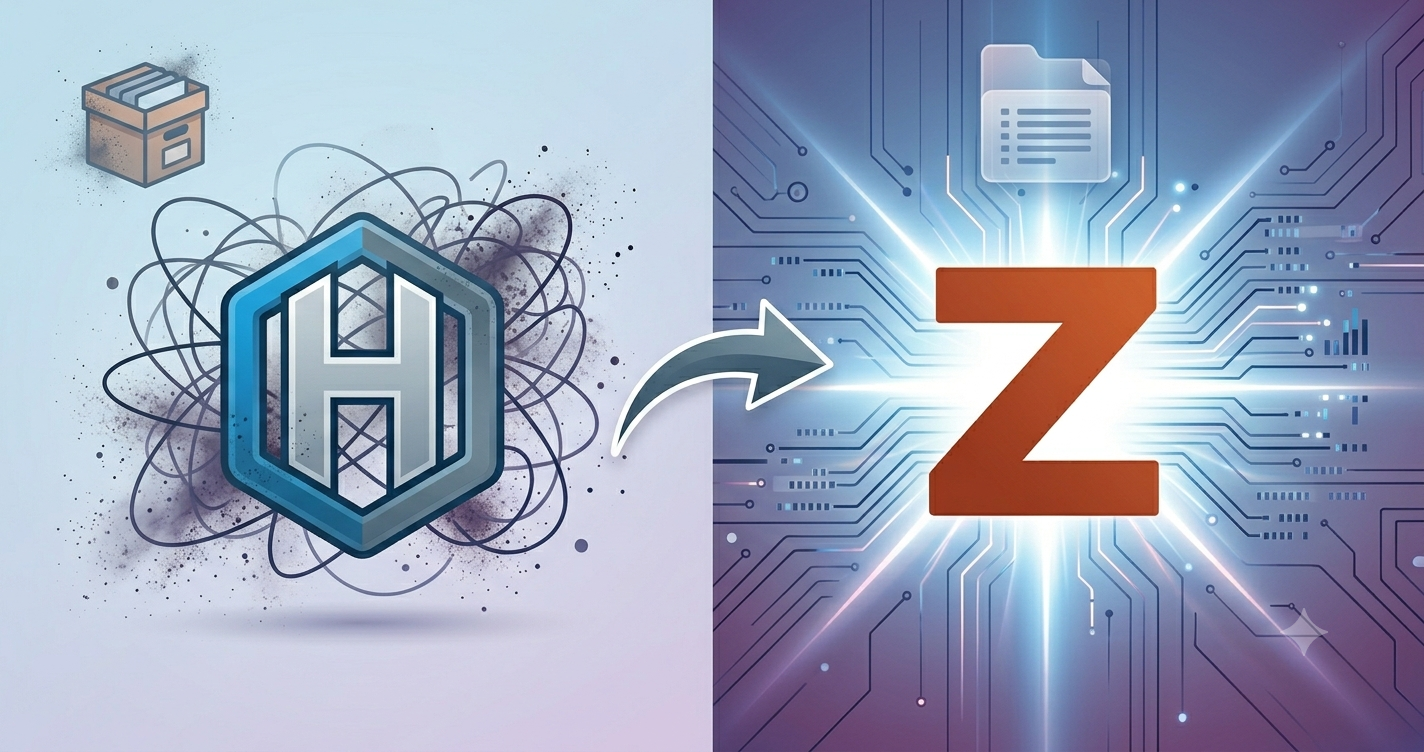
Recently, I migrated my freelance company’s homepage off Hugo and rebuilt it entirely using Zola — a modern static site generator written in Rust. The old site worked fine, and in truth, a company homepage rarely requires daily or even weekly updates.
So why spend a perfectly good evening replacing a running system?
It came down to eliminating context switching and fixing the inevitable breaking-change trap.
The Problem: The High Cost of the "Rare Update"
When a system only needs to be touched once every six months, two predictable problems occur:
Ecosystem Bit Rot: Hugo is incredibly powerful and fast, but its ecosystem moves aggressively. Almost every single time I opened the repository after a hiatus to make a minor textual tweak, the local Hugo runtime and the theme template had drifted out of sync. Suddenly, a 2-minute text update transformed into a frustrating infrastructure chore: wrestling with dependency versions, pinning or downgrading local binaries, or waiting for a third-party template maintainer to patch a breaking change.
Context Switching and Template Friction: My primary daily development stack centers heavily around high-performance Rust backends, where I routinely use Tera for server-side templating. Dropping back into Hugo meant forcing my brain to shift gears into Go’s template syntax and Hugo’s highly specific taxonomy rules (Shortcodes, Page Bundles, etc.).
In a large enterprise, this kind of micro-ecosystem fragmentation is what silently kills developer velocity. For an independent developer, it's an unnecessary drain on mental bandwidth.
The Solution: Paradigm Synergy via Zola + Tera
Migrating to Zola completely flattened this friction due to two core structural advantages:
Built-In Backwards Compatibility Zola is distributed as a single, self-contained Rust binary with zero external dependencies. More importantly, the project places a massive emphasis on stability and backwards compatibility. When I commit a Zola site, I have a high degree of confidence that running a build six months or a year from now will yield the exact same output without a cascading wall of deprecation errors. No environment managers, no version pinning—it just compiles.
Eliminating Mental Gear Shifting Because Zola uses the Tera template engine (which is heavily inspired by Jinja2 and Twig), the syntax, loops, macros, and control structures are identical to what I am already writing in my active Rust web applications.
By unifying my frontend marketing stack with my backend engineering stack, the cognitive load dropped to absolute zero. Modifying my corporate homepage now uses the exact same muscle memory as building a high-concurrency backend API.
The Modern, Zero-Cost Deployment
To complement this lean architecture, I kept the deployment footprint entirely mechanical and free of operational overhead:
Source & Pipeline: A dead-simple GitHub repository paired with a custom GitHub Actions workflow that triggers on every git push.
Compilation: The workflow spins up, instantly compiles the Zola static assets at hyperspeed, and pushes them directly to GitHub Pages.
Routing: A custom domain managed via GoDaddy, pointing straight to the GitHub Pages edge infrastructure.
The result is a bulletproof, secure-by-default pipeline with a $0/month hosting bill and zero servers to patch.
The Takeaway
Unifying your stack isn't just about language chauvinism; it’s about protecting your focus. By migrating to a tool that respects backwards compatibility and shares a unified templating paradigm with my core language of choice, I turned a high-maintenance chore into a seamless, low-friction asset.
For projects that spend most of their lives sitting idle, stability and cognitive alignment are the ultimate features.